
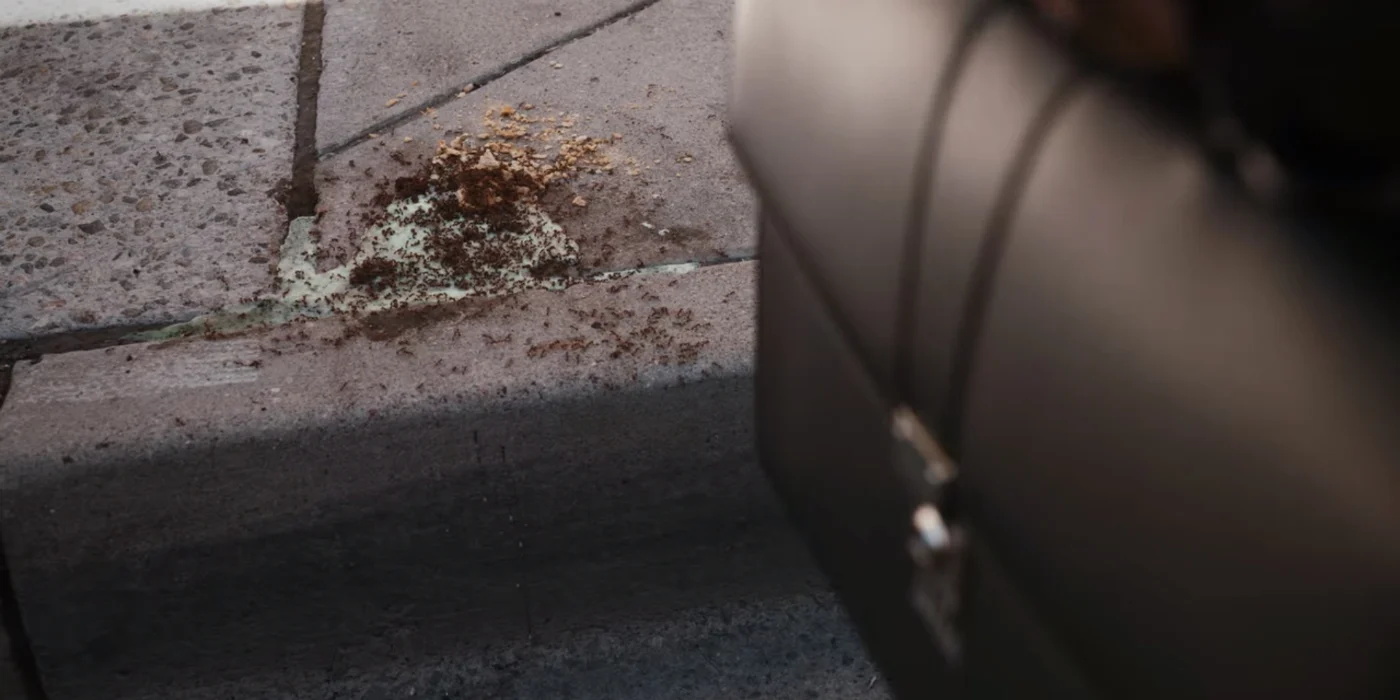
I could write an entire review just trying to decode all the little images that “The Guy for This” parcels out for the viewer. One of the things that sets Better Call Saul (and its predecessor) apart is a penchant for that type of symbolism. The visual conveys as much of what the audience is supposed to take away as the dialogue. So when an episode begins with ants slowly but surely descending on Jimmy’s ice cream cone, and ends with the aftermath of that miniature invasion, it’s clear that Peter Gould and company are trying to tell us something.
The easiest interpretation of the six-legged infestation is as a visual metaphor for Jimmy’s slow slide into mercenary criminality. He’s enjoying a good thing, only for something unexpected to come along and turn it all upside down. One scavenger shows up to take a cut, then a few more hear about it, and so on and so on until, eventually, the whole colony is there. Jimmy returns to find that good thing gone, with nothing but insects wanting their taste crawling around.
You can stretch that to fit Jimmy’s story in “The Guy for This”, where his first minor brush with the cartel via Tuco brings him to this point. You can stretch it to fit his broader narrative this season, where his rule-bending new legal practice is still mostly on the up-and-up, until he gets involved with more serious criminals and suddenly finds himself surrounded by them. Or you can stretch it to fit Jimmy’s arc across two series, where from the day he earned his law degree, his inability to put Slippin’ Jimmy to rest opened the door for bloodsuckers to come for him and pull him down into this swarm.
Or maybe it’s just a cool shot of melted ice cream.
Whatever that sequence means, it’s neat to see the show’s major plot elements spin into place here. Outstanding character work usually drives Better Call Saul, bolstered by the show’s fantastic performances, piercing themes, and aesthetic bent. But Peter Gould and company also know how to spin a twisty plot that leaves you on the edge of your seat wondering what happens next. As much as this series likes a slow burn, when it starts weaving things together, it makes you bite your nails waiting for the inevitable “boom!”
Ben & Jerry's Newest Flavor: Butter Pec-ant!
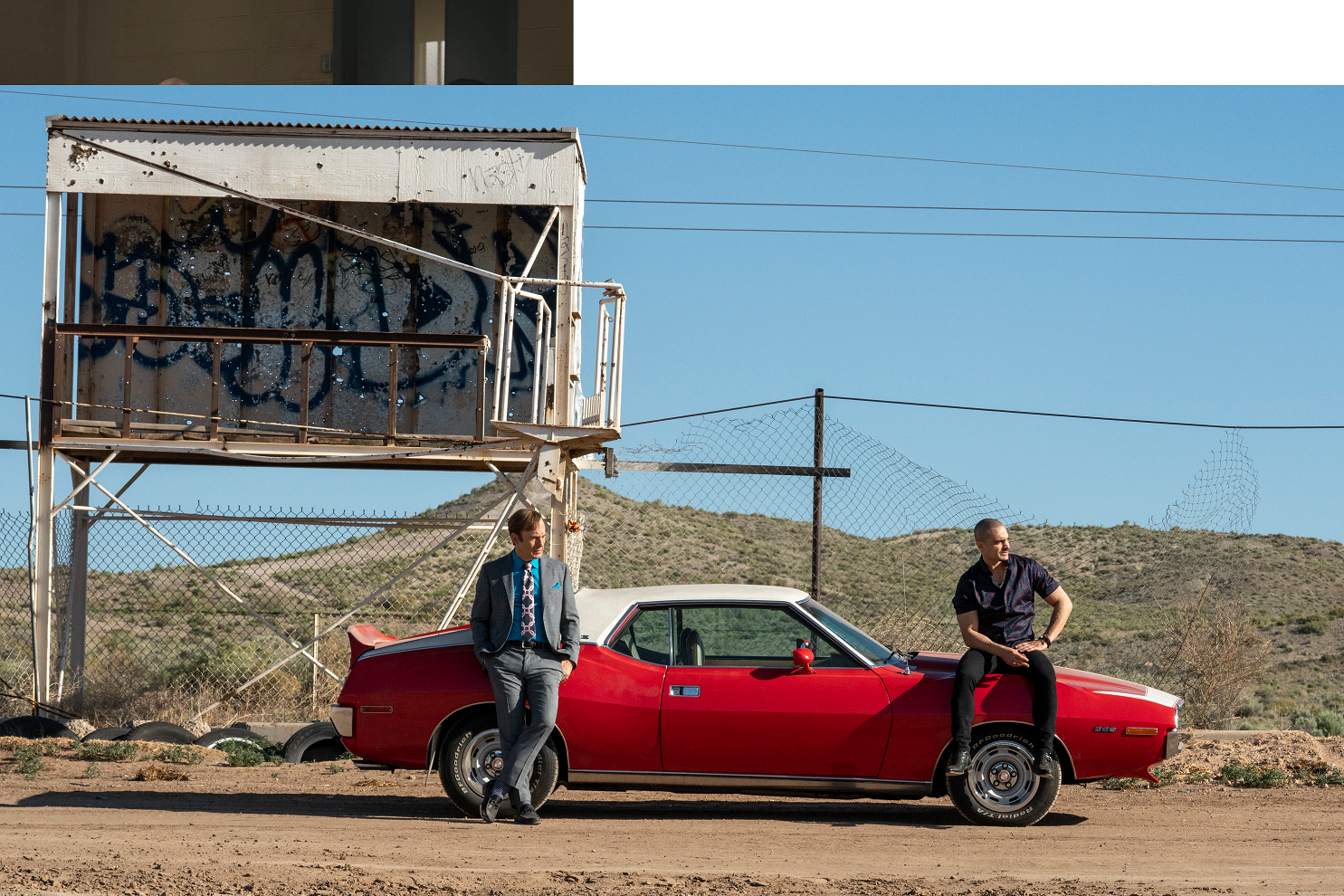
Here, that takes the form of a scheme that ties all corners of the show together, even connecting to Breaking Bad. Nacho starts the ball rolling with a suggestion that Lalo bring in Saul to handle the situation with Krazy 8. Lalo’s working on a cunning plan, which involves getting Krazy 8 back on the street by having him spill to the police, only about Gus Fring’s operation rather than the Salamancas’. It’s a clever way to solve two problems at once: keeping a low-level guy who’s never done jail time from cracking in the joint, while also using the cops to put pressure on a rival.
The only catch for Saul is that he doesn’t actually want to be involved in any of this. What’s particularly interesting about these scenes is the way Nacho brings in the newly-minted Mr. Goodman because he’s seen Saul’s resourcefulness firsthand. (Lalo even comments on his “mouth” in the same way that Tuco did.) And yet, while Saul can use his gift of gab to wriggle out of plenty of situations, he can’t manage to avoid doing this job. Even when he tries to offer alternative solutions or price himself out of the market, Lalo ignores it.
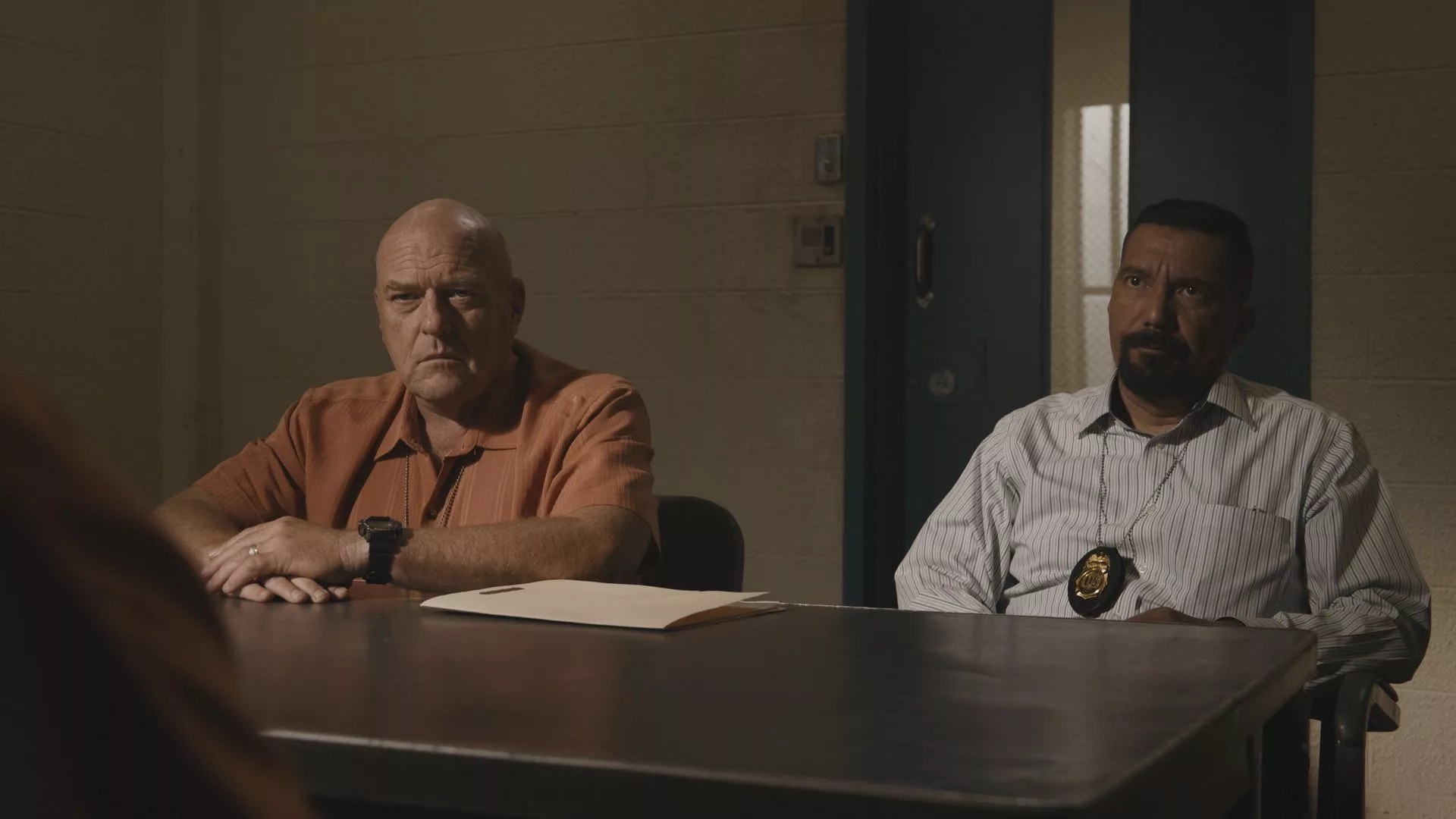
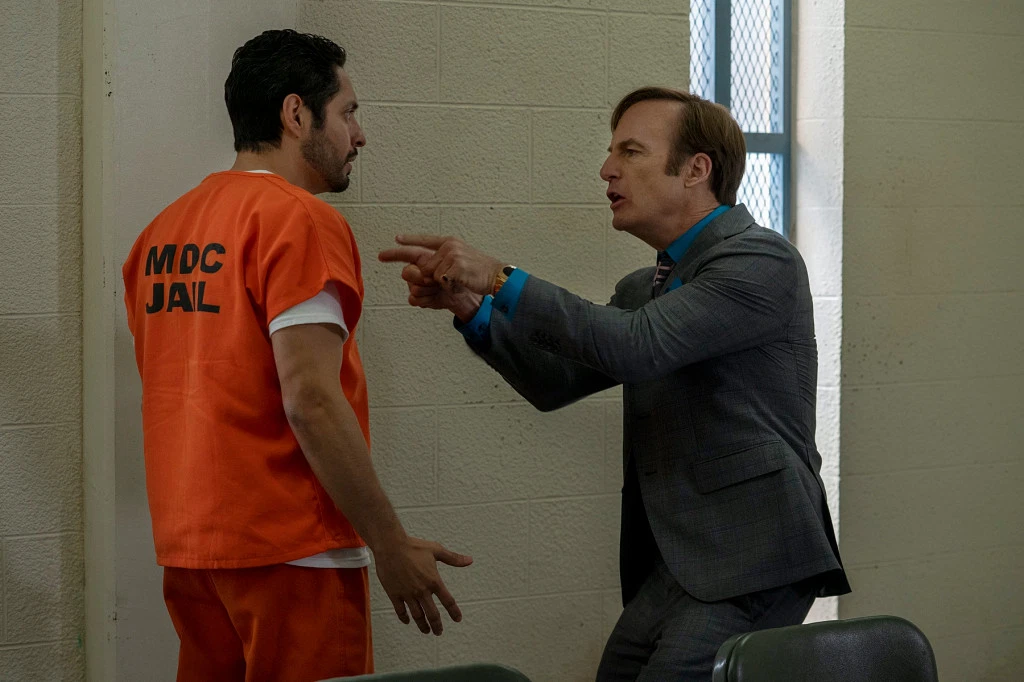
So Saul relents and works his old Slippin’ Jimmy charms. Not only does he coach up Krazy 8 for what to say to the cops, but he helps grease the wheels of justice when his “client” faces the officers interrogating him. And those police turn out to be…Hank and Gomey!
Krazy 8’s bargain is a nice way to integrate these two familiar characters into the world of Better Call Saul. I’ll admit, for a show that’s already gotten a little too cute with its connections to the Breaking Bad (see also: an origin story for Hector’s bell), I don’t know that we really needed this duo back in action on the spin-off. But if they’re going to be included, this is a superb approach. Not only does the show nicely reintroduce the pair of DEA agents — hinting at their arrival before their faces fill the frame — but it makes them worthy adversaries against Jimmy’s efforts to satisfy his…shall we say…persuasive clientele.
"This is my over the moon face."
That’s because Hank sniffs out the ruse. Even when Jimmy does the whole “lawyer trying to prevent his client from giving away the game” routine, Special Agent Schrader doesn’t buy it. The show smartly walks the line with Hank, keeping him the same crass bulldog of a man he was before the audience saw reason to sympathize with him, while still showing off his solid police instincts. Hank’s jock banter with Gomey remains on point, and he’s nevertheless smart enough to go toe-to-toe with Jimmy and extract a few concessions in his usual hard-headed way.
The plot still needs Saul to (mostly) come out on top here, though. So Jimmy springs Krazy 8 on the “contingency” that the cops will find something based on his information and make a few arrests. That’s a victory. Saul secures safe passage for his client so that he doesn’t get fingered as a rat by his criminal associates. He even tries to protect Krazy 8’s wellbeing by limiting his confidential informant status to these two cops and these two cops only, giving Better Call Saul a convenient excuse to keep our favorite DEA agents in the fold.
The one catch is that Jimmy endeavors to make this operation a one-time thing and fails. He tries to beg off after laying out the terms of the deal to Lalo and Nacho, pleading that he has too busy of a schedule to keep up, only for Lalo to say that he’ll “make time” in that quietly intimidating way. The ants have swarmed; the ice cream has melted, and Jimmy’s a part of this now, whether it’s in his plans or not. That’s what Nacho tells him — it doesn’t matter what Jimmy wants — when you’re in, you’re in.
That’s just one of many lines of dialogue in this episode uttered to one person and meant for another. Nacho is nominally talking to Saul about how he’s stuck with them now, but Lalo’s reluctant lieutenant is really talking about himself. Whether Nacho wants to be in a life of crime or run away doesn’t register. He doesn’t have a choice. He’s in too deep now, and there’s little, if anything, he can do to extricate himself.
"My clients generally do better in an El Camino."
Nacho’s stuck trying to placate all sides. He continues ingratiating himself to his boss by enlisting Saul to solve the Krazy 8 problem. His ploy, however, just leads Lalo to sic the DEA on Gus, which means Nacho needs to warn “the chicken man” about what’s coming, which means his blackmailer won’t be happy, which means Nacho will remain in a precarious position between two warring crime bosses.
And yet, despite the cartel machinations, the most powerful scene in the episode comes when Nacho is confronted by his father. Mr. Varga shows up to Nacho’s apartment to tell him about an offer he received to buy the family shop, one that would give him the money and the excuse to go somewhere far away. The catch is that Nacho’s dad is smart, and like Lalo and Hank (and one recalcitrant would-be homesteader), he sees through the bullshit.
Mr. Varga knows that his son is fronting the money, trying to get him to leave town. But Mr. Varga refuses to go. He refuses to accept such dirty money. He has his principles, and he will not bend them, even for his son. You feel for Nacho, because he’s trying to protect his father through all of this. Whatever he wants or doesn’t want, Nacho doesn’t have a choice now. The ants have swarmed him too. But he’s doing everything he can to keep his dad out of that mess. Mr. Varga is just too stubborn and too honorable to take the deal.
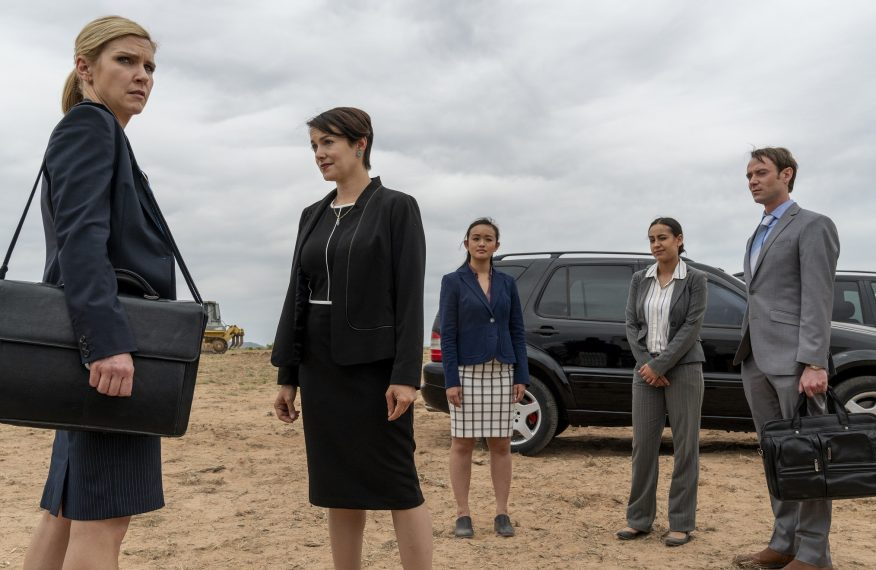
That puts Nacho and Kim in strangely similar positions. Kim’s goal in this episode is to get an old man to move off his property, because it’s in the way of a major Mesa Verde development as in Up (or, Kelo v. City of New London if you’re legal-minded). Like Nacho, she also tries to play nice with an old man standing on ceremony, offering him money, trying to make him see reason, only to be rebuffed due to “the principle of the thing.”
"Alright, everybody grab a briefcase, and we bum-rush him on three."
He’s only the second of three stubborn old men in “The Guy for This” though. The episode only briefly checks in on Mike, who’s drinking himself to death as he continues to mourn Werner. A bartender tries to get him to leave, telling him he’s had enough, but Mike won’t budge. Instead, he demands the bartender take down a postcard of the Sydney opera house, with the implication that it reminds him of Werner’s yarn about his architect father. The interlude leaves Mike ready to inflict pain on a few local toughs because he feels raw himself. Mike’s still angry over what he had to do for his job, and it’s eating him up in that familiar, stoic-but-wounded Mike Ehrmantraut way.
That, again, puts him oddly in line with Kim. “The Guy for This” circles around themes of what people will do for money, and how much of their soul and principles it costs in the process. Kim is trying hard to maintain both. She’s excited at the prospect of doing nothing but pro bono cases for the day. She is perturbed, to say the least, at her boss pulling her away from them to do less-meaningful but more lucrative work for the firm’s biggest client. And what sets her off, what makes her play hardball with Mr. Acker, is his accusation that she’s all about money, despite what she tells herself. Kim lashes out at him because it’s an accusation that clearly hits home, and it hurts.
It hurts especially because she’s been trying to distinguish herself from Jimmy. She claps back at Mr. Acker that he thinks he’s special, that he thinks the rules don’t apply to him, and that he’s wrong. Just because he doesn’t like the outcome doesn’t mean he can just sidestep the rules. Like Nacho’s pronouncement, those words are offered to one man but meant for someone else. Kim refuses to express these sentiments to Jimmy, no matter how deeply she believes them, so instead she vents them to this man when her own mettle is tested.
(As an aside, my prediction for the series is that the breaking point — if you’ll pardon the expression — for Kim and Jimmy is going to come when Kim’s pro bono clients start leaving her for Saul Goodman because he can get them better results using nefarious means.)
"Don't throw your life away! I just know we've both got bright futures ahead of us!"
So Kim tries to prove herself to another stubborn man, one who refuses to leave his property despite a contract that says he has to. She tries showing him other homes he could live in. She offers to help him move. She even tries to explain why she’s more like him than he thinks — someone from a poor background who never owned anything and understands the value of having something that’s yours. She sets out to prove that she’s not the type of person Mr. Acker believes her to be. But it’s to no avail. He still rebukes her with the pronouncement that she’s someone who’ll say whatever it takes to get what she wants — someone like Jimmy.
That sets something off within Kim. The ants aren’t the only bit of visual symbolism here. Early in the episode, Jimmy comes home to see Kim drinking on their balcony. He meets her there with two fresh ones, resting her empty on the railing. Kim gazes at the bottle as it sits precariously, representing a certain recklessness in Jimmy that she’s tired of. Kim doesn’t say anything, because she can’t bring herself to. But when she goes inside, disgusted after hearing Jimmy talk about how this is the most profitable day Saul Goodman’s ever had, she grabs the bottle, representing her rejection of that ethos.
And yet, when she comes home after the verbal skirmish with Mr. Acker, the tables are turned. She joins Jimmy on the balcony. She shares a smoke with him, a continuing symbol of their bad kid camaraderie. Jimmy doubles down on his prior bottle-based recklessness, playing loose-and-catch with an empty of his own.
But Kim does him one better. She stops pussyfooting around and simply pitches her drink into the parking lot. Jimmy follows suit with his own beverage. And from there, they just take turns yeeting their full beers for the hell of it, until some unwanted attention sends them indoors.
That image carries some potency too. Kim tries. She tries so damn hard. She doesn’t want to be swallowed up by bloodsuckers like all the others. But no matter what she does, no matter how well she means, the world seems to treat her like Jimmy anyway. So if that’s the outcome regardless of her choices, if she’s in this whether she wants to be or not, she might as well enjoy it. Pour one out for Ms. Wexler, and then toss it over the side. Let it mean whatever you’d like it to.
